繁体中文
繁体中文
 English
 中文
中文

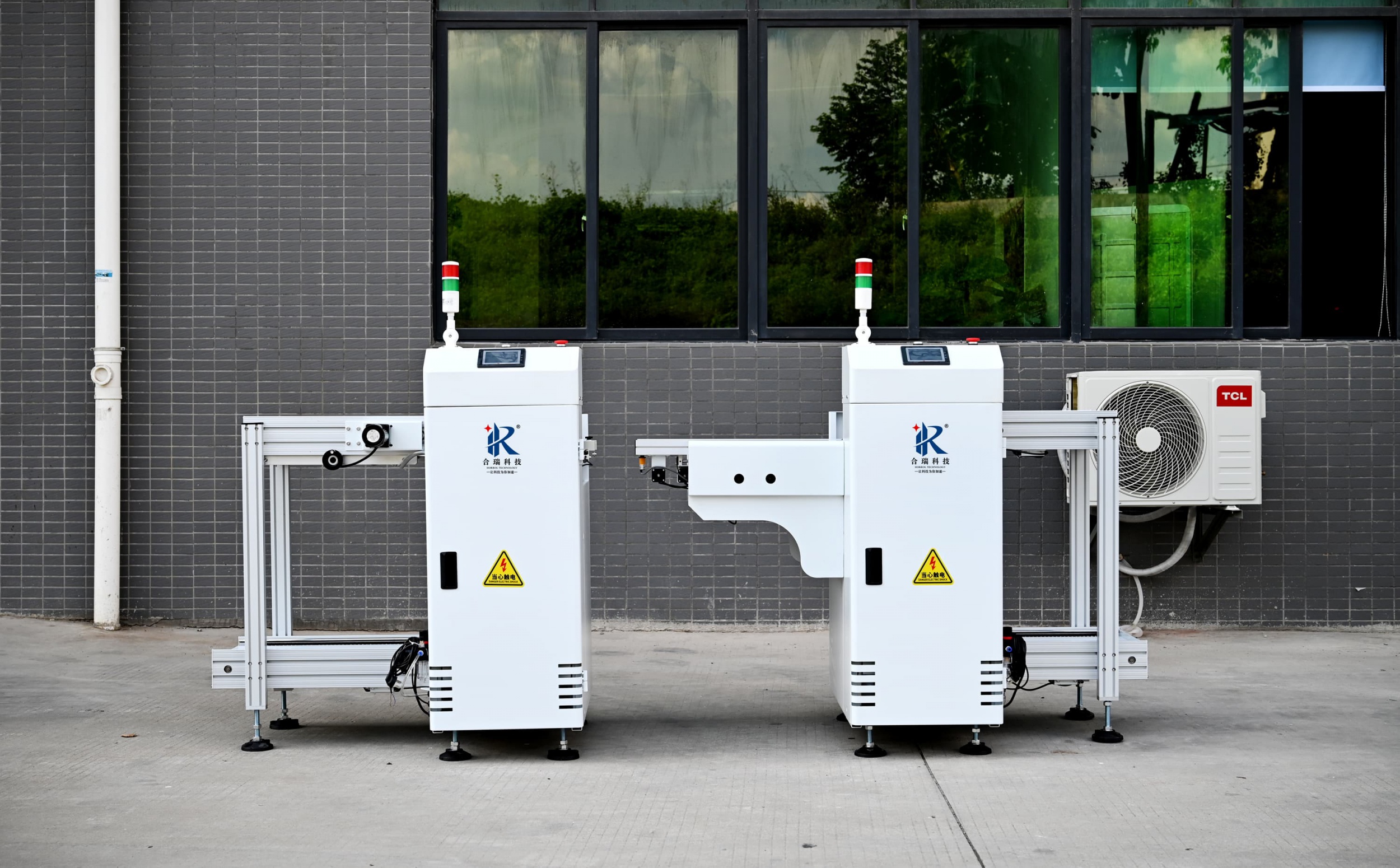
Horrol Technology's parallel transfer machine is a parallel transition conveying device used between the two ends of an automated production line or between two conveying lines with deviations in the center line. The device is specially designed for the horizontal connection parallel transfer mechanism of the mounting or plug-in assembly line, and is used for PCB board transfer and transportation. It can meet the transmission needs of mounting or short-insertion component PCB boards with a width of 50 to 300 mm and a suitable length. It consists of mechanical transmission components, text, and a programmable controller as the main electronic control system.

1.1 Product Introduction
1.2 Features
- It is used to merge two SMT or DIP production lines into one line, or split one line into two lines, and adjust the path of the circuit board running direction on the production line.
- The overall bracket is made of 2mm steel plate welding, the surface is painted, and the bottom is equipped with M16 adjustable shock-proof feet to ensure a stable structure and elegant appearance.
- The translation adopts linear module type to ensure smooth vehicle operation, ultra-quiet, noise-free and vibration-free. It is driven by a stepper motor and has high positioning accuracy.
- The top of the machine is equipped with a green transparent plexiglass window, which is convenient for observing the operation of the machine.
- The vehicle width is freely adjustable, easy to adjust, improving efficiency and saving costs.
- All positioning uses imported reflective induction switches, and PLC automatically detects the position for easy adjustment.
- The operation adopts a touch interface, which makes human-computer dialogue convenient and the operation is simple and easy to understand.
- All electrical components are original and genuine, and major control devices such as PLC have a two-year warranty to ensure stable and reliable operation of the equipment.
- With fault display and I/O table query, maintenance becomes simple and fast.

1.3 Technical parameters
- Load-bearing capacity: able to adapt to PCB boards of different weights.
- Speed: The translation speed is adjustable to meet the speed requirements of different production lines.
- Precision: High positioning accuracy ensures that the PCB board is accurately transferred to the next process.
- Control system: Adopt advanced PLC control system to realize automatic operation.
- Size: The size of the equipment can be customized according to the specific needs of the production line.
1.4 Application Scenarios

2. Equipment functions and technical features
2.1 Device Function
- Line merging and diversion : The equipment can merge two SMT or DIP production lines into one line, or divert one line into two lines, effectively adjusting the running direction of the circuit board on the production line. This function makes the production line layout more flexible and can adapt to different production needs and process optimization.
- Smooth operation : The linear module translation is adopted to ensure no noise and vibration during the movement, which ensures the smooth operation of the equipment and reduces the potential damage to the PCB board.
- High-precision positioning : The stepper motor transmission system ensures high positioning accuracy, which is essential for precise docking and transfer of PCB boards.
- Observation window : The green transparent plexiglass window design on the top of the machine allows the operator to observe the operation of the machine in real time and make timely adjustments or discover problems.
- Width adjustment : The vehicle width can be freely adjusted as needed. This flexibility improves the adaptability and production efficiency of the equipment.
2.2 Technical Features
- Structural stability : The overall bracket is welded with 2mm thick steel plate and the surface is painted. The bottom is equipped with M16 adjustable shock-proof feet to enhance the stability and durability of the equipment.
- Intelligent control : PLC control system is adopted to realize automatic operation, reduce manual intervention, and improve production efficiency and accuracy.
- Friendly human-machine interface : The operation interface adopts a touch screen, which simplifies the operation process and makes the machine operation more intuitive and easy to understand.
- Original electrical components : All electrical components are original and genuine, and major control devices such as PLC are provided with a two-year warranty to ensure the long-term stable operation of the equipment.
- Convenient maintenance : The equipment is equipped with fault display and I/O table query functions, making maintenance work simple and quick, reducing maintenance costs and time.
- Customized service : According to the specific needs of the customer's production line, Horrol Technology provides customized services for parallel transfer machines, including customization in size and function to meet the needs of specific production environments.

3. Application scenarios and advantages
3.1 Application Scenarios
- SMT production line : In the surface mount technology (SMT) production line, the parallel transfer machine is used to transfer PCB boards from one process to another, or to merge multiple production lines into one line to improve production efficiency and flexibility.
- DIP production line : This equipment is also applicable in the dual in-line package (DIP) production line, which can realize the precise docking and transfer of PCB boards and optimize the production process.
- Logistics system : In the automated logistics system, the parallel transfer machine is used to achieve the docking and transfer of goods between different conveyor lines. Especially when there are deviations in the conveyor lines, its parallel transition function is particularly important.
- Multi-line offset translation connection : When it is necessary to merge PCB boards from multiple production lines into one reflow or wave soldering equipment, or to divert PCB boards from one production line to multiple equipment, the parallel transfer machine provides an effective solution.
3.2 Equipment advantages
- Improve production efficiency : By merging 2 to 4 SMT lines into one reflow soldering machine, or merging 2 plug-in lines into one wave soldering machine, the utilization rate and production efficiency of the equipment are significantly improved.
- Structural stability and durability : The bracket welded with 2mm thick steel plate and M16 adjustable anti-vibration feet ensure the stability and long-term durability of the equipment.
- Easy to operate : The touch interface operation mode makes the equipment operation simple and easy to understand, reducing the operator's training time and operating errors.
- High-precision positioning : The combination of stepper motor drive system and imported reflective induction switch ensures high-precision positioning of the equipment and reduces errors in production.
- Low maintenance cost : Fault display and I/O table query functions simplify the maintenance process, reducing maintenance cost and time.
- Customized service : Provide customized service according to the specific needs of customers, so that the equipment can better adapt to different production environments and needs.
- Improve production line flexibility : The parallel transfer machine makes the layout of the production line more flexible and can quickly adapt to changes in production needs, enhancing the adaptability and flexibility of the production line.
- Reduce noise and vibration : The linear module translation design ensures that the equipment is noise-free and vibration-free during operation, providing more comfortable operating conditions for the production environment.

4. Equipment operation and maintenance
4.1 Operation process
- Equipment start-up : The operator first needs to check whether the equipment is in good working condition, including checking whether all connections are tight, then turn on the power switch and press the start button to put the transfer machine into automatic working state.
- PCB board transfer : The mounted PCB board is transferred out of the placement machine and transported to the board delivery platform. When the sensor head on the transfer machine senses that there is a board coming, it will automatically transfer the board to the conveying guide rail on the transfer machine.
- Transfer to the next process : The transfer table on the transfer machine transfers the PCB board to the transfer table entrance of the reflow soldering and enters the next process.
- Abnormal handling : During operation, once the transfer machine is found to be abnormal, the operator should promptly notify the management staff to handle it to avoid production interruption.
4.2 Maintenance
- Daily inspection : Inspect the equipment every day, including checking the operating status of the equipment, the looseness of fasteners and cleaning work, and keep maintenance inspection records.
- Emergency handling : In case of emergency, the operator should immediately press the "emergency button" to cut off the power supply of the machine, and restart the machine only after the fault is eliminated.
- Regular maintenance : Perform regular maintenance and inspections according to the manufacturer's recommendations, including checking electrical components for wear, lubrication status, and mechanical parts for wear and damage.
- Cleaning work : Clean the equipment regularly, especially remove dust from key components such as sensor switches and PLC controllers to keep them in good working condition.
- Troubleshooting : The equipment is equipped with a fault display function. When a fault occurs, the operator can quickly locate the problem based on the fault code and perform corresponding repairs or replace parts.
4.3 Maintenance precautions
- Professional training : Operators should receive pre-job training before taking up their posts and be familiar with the correct operating methods and techniques of the machine to ensure the safety of operation and the stability of the equipment.
- Use original accessories : When replacing parts, use original accessories recommended by the manufacturer to ensure the compatibility and performance of the equipment.
- Comply with operating procedures : Operators should strictly abide by operating procedures to avoid equipment damage or production accidents caused by illegal operations.
- Recording and Analysis : Keep detailed records of each maintenance and troubleshooting, and conduct regular analysis to identify potential problems and take preventive measures.